

How strength training helps you lose weight
Strength training works on two fronts when you're trying to lose weight. During the session, you burn calories. After the session, your body keeps spending energy repairing the fibres you worked. That afterburn lasts 12 to 24 hours depending on how hard you trained.
The second lever matters far more over time. Every kilo of muscle you gain raises your resting metabolism. The figure usually quoted is around 13 kcal per kilo of muscle per day at rest. Not much over a day. A lot over a year.
There's a third argument people forget. In a calorie deficit with no strength work, a big share of the weight you lose is lean mass, not just fat. Resistance training limits that loss. You get leaner while keeping your engine, which is what stops the weight coming straight back six months later.
In practice, the person doing cardio only drops the first few kilos fast, then stalls. The one who adds three strength sessions a week loses more slowly on the scale, but their shape changes.
Cardio or strength training for weight loss: the real comparison
Let's put numbers on it. An hour of running at a moderate pace burns roughly 500 to 700 kcal for a 75 kg person. A standard strength session, rest periods included, sits closer to 250 to 400 kcal. On immediate energy spend, cardio wins, no argument.
But the calories burned in one session aren't what drives weight loss. What counts is the balance across the week and across the year. That's where strength training takes the lead, because it changes your resting energy expenditure — the one running 24 hours a day.
| Criterion | Cardio | Strength training |
|---|---|---|
| Calories per hour | 500 to 700 | 250 to 400 |
| Post-session effect | Low | 12 to 24 h |
| Muscle mass | Maintained | Gained |
| Resting metabolism | Stable | Rising |
| Visible results | 2 to 4 weeks | 6 to 10 weeks |
The conclusion is simple: cardio or strength training for weight loss is the wrong question. They don't act in the same place. One digs today's calorie deficit, the other builds the machine that spends on all the other days.
Combining cardio and strength training for weight loss
The most effective formula is still both. Three strength sessions and two cardio sessions a week is a solid base for most people. If you're short on time, two strength sessions and one cardio session already make a clear difference.
Order matters. Do the strength work first, while your nervous system is fresh and you can actually load the bar. Cardio comes after, or on another day. The other way round degrades your sets and raises your injury risk.
- Separate days: ideal if you have 5 slots a week.
- Same session: strength work, then 15 to 20 minutes of easy cardio.
- Circuit training: both at once, when time is genuinely tight.
- HIIT: 1 session a week maximum — recovery is expensive.
A cardio and strength programme for weight loss should never pile on sessions until you're saturated. Too much volume wrecks your sleep, your recovery and your appetite. Four sessions held for twelve weeks beat six sessions abandoned after a month.
Which strength exercises actually matter for weight loss
Compound movements first
The best strength exercises for losing fat are the ones that recruit the most muscle at once. Squat, deadlift, lunges, bench press, rows, pull-ups. A squat works several dozen muscles; a calf raise works two. The energy cost isn't comparable.
Work in the 8 to 12 rep range, with 60 to 90 seconds of rest. That range gives you enough mechanical tension to build muscle and enough work density to keep your heart rate up. You can browse the training programmes sorted by goal to see how these movements fit together across a week.
Training with bodyweight or with kit
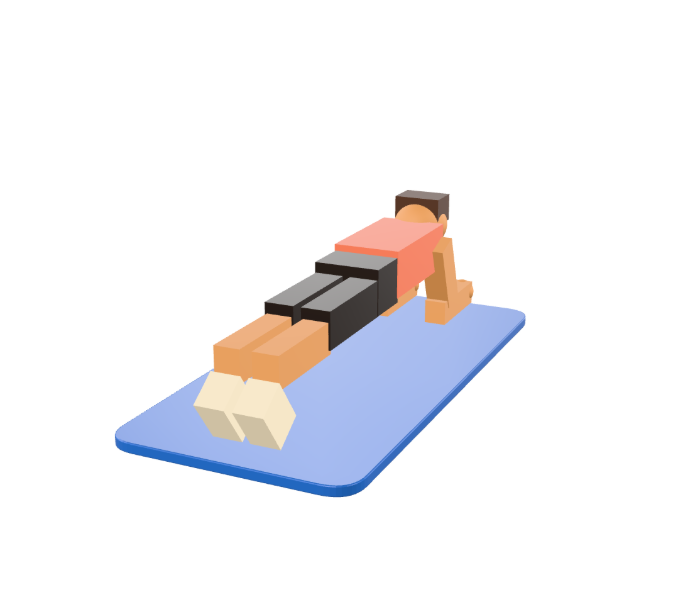
You don't need a gym. Your own bodyweight is enough to lose weight: push-ups, squats, lunges, planks, running on the spot. Running on the spot, in fact, works as a warm-up, a finisher and backup cardio when it's raining. Thirty seconds on, thirty off, ten rounds.
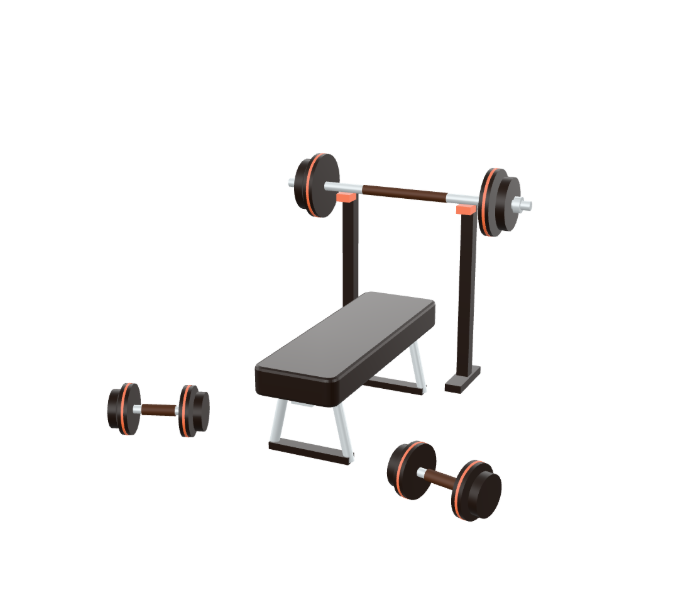
A bench with a few accessories (adjustable dumbbells, bands, a bar) widens your options without taking up three square metres. Budget 150 to 400 euros for a decent set. It's the piece of kit that improves home training the fastest.
Starting strength training from scratch
The first six weeks are for learning the movements, not for setting records. Light loads, full range, controlled tempo. An effective strength session for a beginner lasts 45 minutes, not two hours.
The logic is the same for women and men: same exercises, same principles, loads matched to your level. The fear of "getting too bulky" doesn't match how the body actually works. Muscle builds slowly, and it takes up less space than fat for the same weight.
What a strength programme for weight loss looks like: a typical week
Here's a three-session full body template you can run at home or in the gym. It spreads the work across the whole body, which maximises the energy cost of each session.
- Monday: squat, bench press, rows, plank — 4 sets of 10.
- Wednesday: lunges, pull-ups or lat pulldown, overhead press, leg raises.
- Friday: Romanian deadlift, push-ups, Bulgarian split squats, 8-minute circuit to finish.
- Saturday: 40 minutes of brisk walking, cycling or swimming.
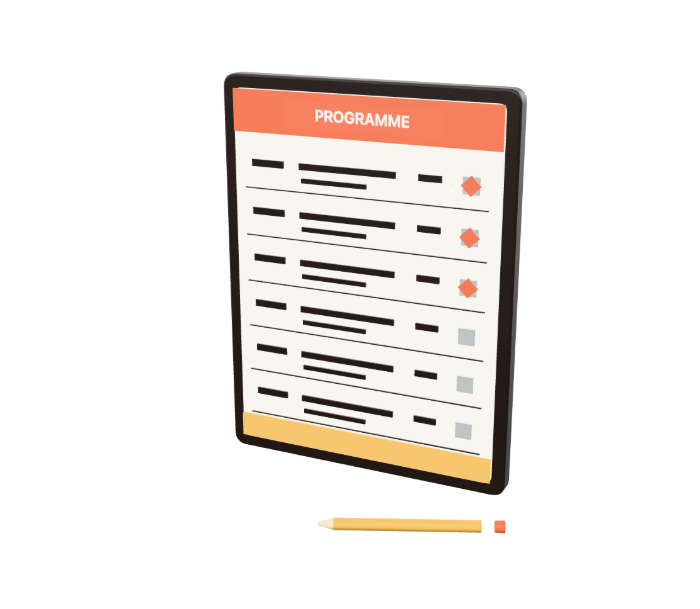
Add load or reps as soon as the last set goes through without a struggle. That week-by-week progression is what separates training from just sweating. Without written tracking, it disappears within three weeks.
That's exactly where most people drop off: they can't remember what they lifted last time. MUSCU builds a programme around your profile, films all 1,800 exercises in the catalogue and logs every set during the guided session on your phone.
Food, calorie deficit and reading the scale
No amount of training cancels out eating too much. Losing weight takes a calorie deficit, somewhere around 300 to 500 kcal a day. Go deeper and you lose muscle, and your energy collapses in the gym.
Two markers are enough day to day. Aim for 1.6 g of protein per kilo of bodyweight to protect muscle mass. And keep carbs around your training: they fuel the work and help you recover.
Go easy on the scale in the first few weeks. Your weight can nudge up at the start of a strength programme: muscle stores water and glycogen, and post-session inflammation adds a few hundred grams. Measure your waist instead, every two weeks, in the morning. It's a far more reliable read on fat loss.
Can you target your belly or your thighs?
No. Spot fat reduction doesn't exist. Doing 200 crunches won't burn belly fat; it strengthens muscles sitting under a layer that only an overall calorie deficit will shift. Where you store fat comes down to genetics and hormones.
What is true: the belly is usually the last area to go in men, and the hips in women. That calls for patience, not extra exercises. Expect 3 to 6 months before the change is obvious in photos.
One last piece of method: measure few things, but measure them constantly. Weight once a week, waist every two weeks, loads every session. The progress tracking built into the sessions saves you keeping a separate notebook, and makes a plateau visible before it drags on for two months.
The takeaway
Strength training isn't better than cardio at burning calories during the training hour itself. It is better for holding a weight loss goal over time, because it protects muscle mass and pushes your resting expenditure up.
The answer fits in one sentence: strength training three times a week, cardio on top, a moderate calorie deficit and enough protein. The rest is consistency, and that's the one variable nobody can optimise for you.