

Why breathing matters in the gym
In weight training, your breathing controls two things: how much oxygen reaches your muscles, and how stable your torso is. Hold your breath through ten reps and you lose both. You notice it most on the last set, the one where technique falls apart first.
During the effort, your lungs clear the carbon dioxide produced by muscle contraction. If you cut the exhale short, your heart rate climbs and you need longer between sets. Better oxygenation won't make you stronger, but it stops you losing reps for a reason that has nothing to do with strength.
The second role is mechanical. Air held in the ribcage and belly creates intra-abdominal pressure that stiffens the spine. Without it, your back rounds as soon as the load gets heavy.
Inhale on the eccentric, exhale on the concentric
The basic breathing technique fits in one sentence: inhale as the weight comes down, breathe out as you produce force. That's the rule used in almost every gym, and it works for the vast majority of exercises.
The eccentric phase is the controlled return of the load: the bar comes down to your chest, the knees bend, the muscle lengthens. That's when you take a deep breath, without straining, through the nose or the mouth depending on what feels natural.
The concentric phase is where you push or pull. The exhale goes with the movement, it doesn't come before it. Breathing out too early drains the pressure from your torso at the worst possible moment.
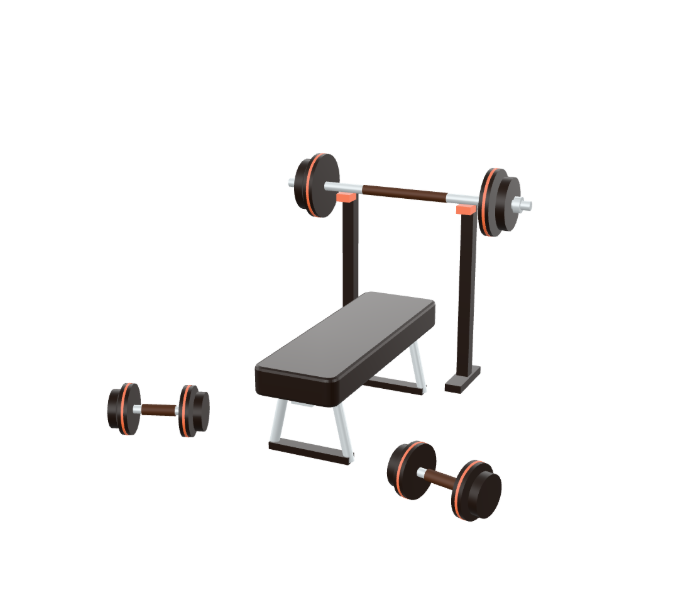
- Bench press: inhale on the way down, exhale as you press.
- Pull-up: inhale at the bottom, exhale on the way up.
- Deadlift: inhale before the bar leaves the floor, exhale at lockout.
On a squat set at 80% of your max, breathing out at the start of the ascent means losing your brace halfway up. The pelvis tips, and the set ends one rep too early.
Holding your breath on heavy loads
On heavy sets, that simple method reaches its limit. This is where you use a breath hold, also known as the Valsalva manoeuvre: inhale, lock the air in, do the rep, then exhale once the weight is stable.
The technique clearly increases torso rigidity under a maximal effort. It stays short: two to three seconds, never a whole set. It raises blood pressure while you hold, which makes it a bad idea if you have hypertension or a known heart condition.
For everything else in your sessions, standard controlled breathing is more than enough. Save the breath hold for sets of 1 to 5 reps on compound lifts.
Belly or chest breathing: which to use
There are two approaches. Belly breathing uses the diaphragm: the stomach expands, the ribs barely move. Chest breathing works the ribcage and fills the top of the lungs.
| Criterion | Belly | Chest |
|---|---|---|
| Air volume | High | Medium |
| Core bracing | Yes | Partial |
| Energy cost | Low | Higher |
| Heavy loads | Well suited | Poorly suited |
| Cardio, long sets | Well suited | Useful as a backup |
For lifting, belly breathing is the default. It fills the lungs better and puts the pressure exactly where the spine needs it. Chest breathing still has its place at the end of a set, when the pace picks up and your body wants air fast.
How to breathe on the most common exercises
Squat
Inhale standing, bar in position, before you descend. Keep the air in through the descent and the start of the ascent, then exhale over the last few inches. One breath per rep, not one for every three.
Rows and pulldowns
On a row or a pulldown, inhale as the weight travels back out. Exhale as your elbows come back towards your body. The rhythm is faster than on a squat because the load is lighter.
Planks and abs
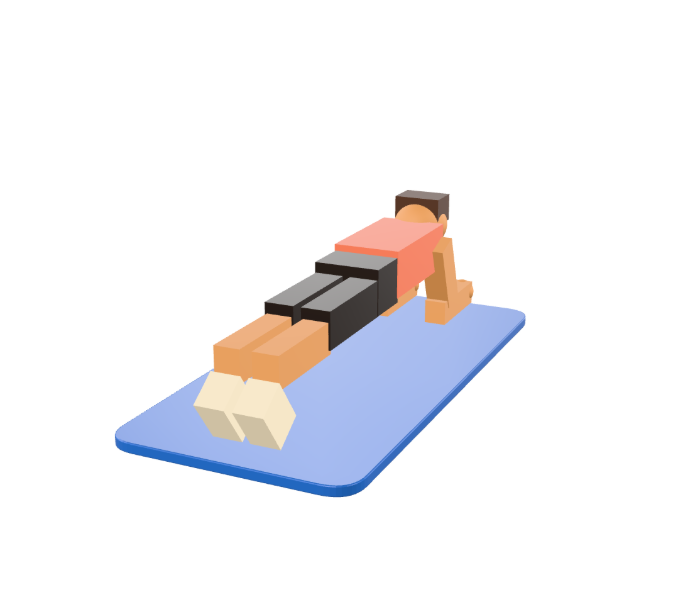
Here you hold nothing. You breathe continuously, with long exhales to keep the stomach tight. A plank held on a breath hold lasts less time and does less for the deep muscles.
Every exercise has its own tempo, and therefore its own moment to inhale and exhale. Our guided training programs show that tempo set by set, so you're not guessing when to breathe out.
Breathing drills to do between sessions
Learning to breathe happens outside the gym, and five minutes is enough. These drills teach you to feel the diaphragm and build your ability to hold air under tension.
- Lying down, one hand on your stomach: inhale for 4 seconds, exhale for 6, ten rounds.
- Seated, back straight: inhale through the nose, hold for 3 seconds, slow exhale through the mouth.
- Standing against a wall: expand your ribs sideways without lifting your shoulders.
Expect two to three weeks of daily practice before it becomes automatic in a session. It works like any technical movement: repetition builds the habit.
The mistakes that cost you reps
The most common one: breathing out of sync, exhaling on the way down and inhaling on the way up. Your torso goes soft exactly when it needs to be hard. Performance drops and your back takes the hit.
Next comes unintentional breath holding on long sets. Plenty of lifters stop breathing from the eighth rep onwards without noticing. A simple check: if you can't count your reps out loud, you're not breathing enough.
The last mistake is a shallow inhale. Air taken only into the top of the chest stabilises nothing. Tracking your session on your phone helps you hold a steady tempo, and with it a steady breathing rhythm from the first set to the last.
Breathing properly takes no equipment and no particular talent. It's a habit to build, then keep session after session, and it pays off in stability, endurance and how comfortable your training feels.