




When can you actually say you've plateaued?
One bad session means nothing. Neither does one weak week. You're dealing with a real training plateau when, over 6 to 8 weeks, the weights, the reps and your measurements all stay flat. That's the minimum window to get past the background noise in your numbers.
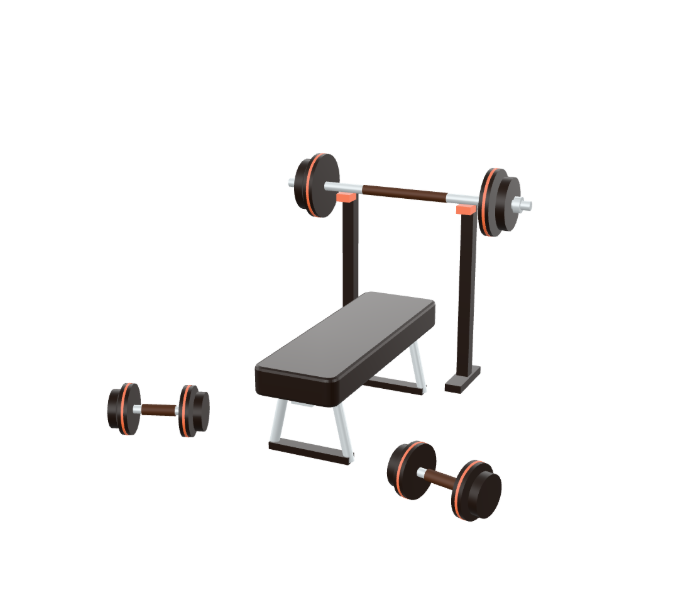
Take the bench press. If you're doing 4 sets of 8 at 60 kg in January and exactly the same thing two months later, progress has stopped. If you've gone from 8 to 10 reps with the same weight, you're still progressing, even if nothing new has gone on the bar.
Signs of a real plateau
- The same weights for more than 8 weeks on your main lifts.
- No extra reps at the same load.
- Bodyweight stuck while you're trying to gain size.
- Sessions that feel harder for the same result.
Plateaus that aren't plateaus
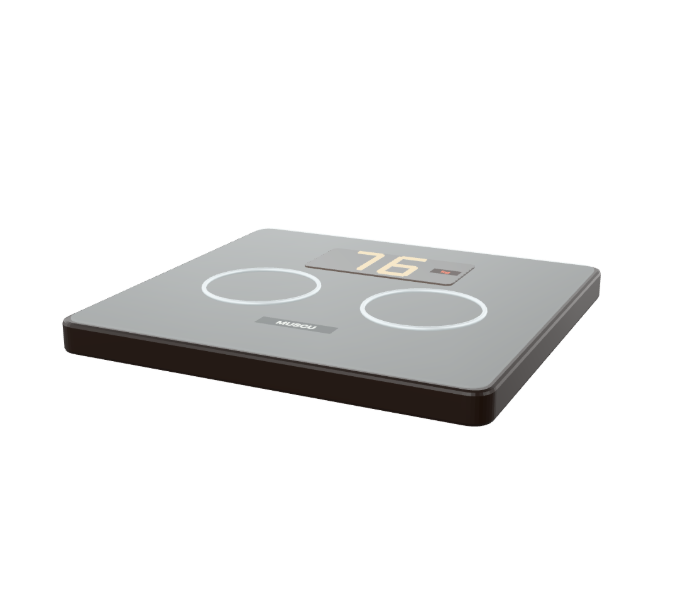
Plenty of lifters think they're stuck when really they're just measuring badly. Scale weight swings 1 to 2 kg over a single day depending on water, salt and digestion. Weigh yourself in the morning, before eating, three days a week, and look at the monthly average.
The other classic case: being a beginner. The first three months bring fast gains, more neural than muscular. The slowdown that follows is normal. Your body can't keep that pace forever, and it isn't a plateau yet.
What causes a training plateau?
A program that doesn't drive progress
This is cause number one. A training program repeated identically for six months sends your body the same signal week after week. A muscle only grows in response to a demand that keeps rising: more weight, more reps, more sets, or less rest.
Without progressive overload written down in black and white, training turns into maintenance. You sweat, you get sore, and nothing changes. Log every session: it's the only way to know whether you're genuinely adding work from one month to the next.
Too much volume, not enough recovery
The opposite excess exists too. Stacking 6 sessions a week with 25 sets per muscle group digs a recovery hole. Strength drops, sleep gets worse, motivation walks out. Two full rest days plus a lighter week every couple of months usually fixes it.
Nutrition that isn't keeping up
You can't build muscle out of nothing. Aim for roughly 1.6 g of protein per kilo of bodyweight per day, plus a small calorie surplus if the goal is to gain muscle. If your weight hasn't budged a gram in six weeks, you're eating at maintenance. It's that simple.
Technique and range of motion
Some people add weight by quietly cutting their range of motion. The number goes up, the muscle does less. Film a set now and then, especially on squats and presses. Clean execution with less weight builds more than a heavy, half-finished rep.
Training plateaus: the most common sticking points
Plateaus almost never come from a single factor. They stack up: a frozen program, short sleep, busy weeks at work, and two months go by with nothing to show. Here's what actually changes when you rebuild the plan.
| Criteria | Frozen program | Rebuilt program |
|---|---|---|
| Weights logged | No | Yes |
| Progression cycle | None | 4 to 6 weeks |
| Exercise variation | Rare | Every 2 months |
| Deload week | No | Planned |
| Average gain over 3 months | None | Real |
In most cases, the lifter isn't training too little: they've been training the same way for too long.
"Change your program": sure, but change what?
The advice is right, just far too vague. Changing doesn't mean throwing everything out. Keep the basic movements and change the parameters: go from 4 sets of 10 to 5 sets of 5, add one variation per muscle group, add a day of frequency. Rebuilding a plan from the weights you're actually lifting takes a few minutes with a program matched to your level, and it stops you from starting over at random.
More weight or more reps to break a plateau?
Both work, just not at the same time. The simplest method: pick a range, say 8 to 12 reps. You stay at the same weight until you hit 12 reps on every set. Then you add 2.5 kg and drop back to 8.
On strength movements like the deadlift, work in the 3 to 6 rep range and add weight in small jumps. On isolation work, adding reps gives better results and is easier on your joints.
Stalled weight while cutting: a special case
On a cut, the scale almost always freezes around week six. Your body burns less at rest and you move less without noticing. Count your steps: plenty of people drop from 9,000 to 5,000 a day without consciously changing a thing.
A stall of 2 to 3 weeks is still normal. Past that, cut 150 to 200 kcal or add walking, never both at once. And don't try to build muscle during this phase: the goal is to hold onto what you have, not add to it.
What's the natural ceiling for muscle gain?
It exists, and it arrives fast. A man gains an average of 8 to 10 kg of muscle in his first year of serious training, about half that in the second, then a few hundred grams a year. After five years, muscle growth is measured in millimetres, not t-shirt sizes.
That's not bad news: it means an advanced lifter should judge progress by the year, not the month. The only levers left are consistency, technique and sleep. Nothing spectacular, but nothing else works.
How to restart your progress in 8 weeks
Getting off a plateau comes down to a few simple decisions, applied in order and without improvising halfway through.
- Week 1: cut the load by 40% and sleep. It's a reset, not wasted time.
- Weeks 2 to 5: new program, 3 to 4 sessions, every set logged.
- Weeks 6 to 8: build back up, one extra rep or 2.5 kg per week.
- Throughout: 1.6 g of protein per kilo, 7 hours of sleep, weight checked 3 days a week.
Tracking is what matters here. Without a history of your working weights, there's no way to tell which lift is moving and which one is stuck. That's exactly what session-by-session progress tracking does: it tells you where you stand before it tells you what to change.