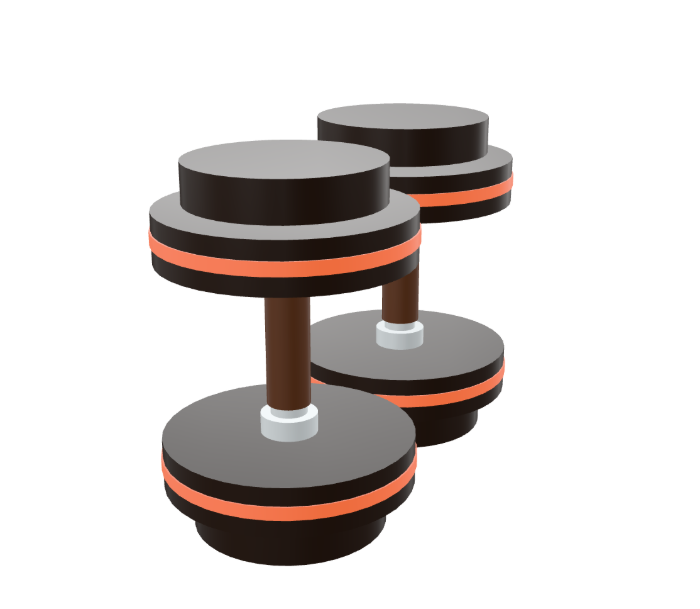
Paire d'haltères

Glissez pour tourner

Bras, biceps et triceps

Arm strength training program

Two pillars, not one more. An arm strength training program is based on flexions for the biceps and extensions for the triceps. Here's how to organize sets, rehearsals and rest times without spending your evenings there.

Arms are not just biceps
We too often reduce the arms to the biceps. At the front work the biceps brachii, the brachialis anterior and the brachioradialis, which flex the elbow and rotate the forearm. Behind, the triceps brachii alone occupies two thirds of the volume, divided into three fascicles: the long, the lateral and the medial. Neglect the back of the arm, and your arm strength program will quickly plateau. The order to remember: elbow flexions for the biceps, extensions to strengthen your triceps, then varied angles so that each leader receives their share of work.
Sets, reps and load
What builds an arm is weekly volume, not the intensity of an isolated session. Count ten to twenty sets per muscle per week, spread over two to three sessions. From 8 to 12 repetitions, you are in the most profitable zone for mass; from 12 to 20, you serve isolation movements like concentrated curls or pulley tricep extensions. Rest: 60 to 90 seconds. One detail takes precedence over everything else. The load must be heavy enough for the last two repetitions to cost, without the position deteriorating. Arched back, rising shoulders: the bar is too heavy.
In the room or without equipment
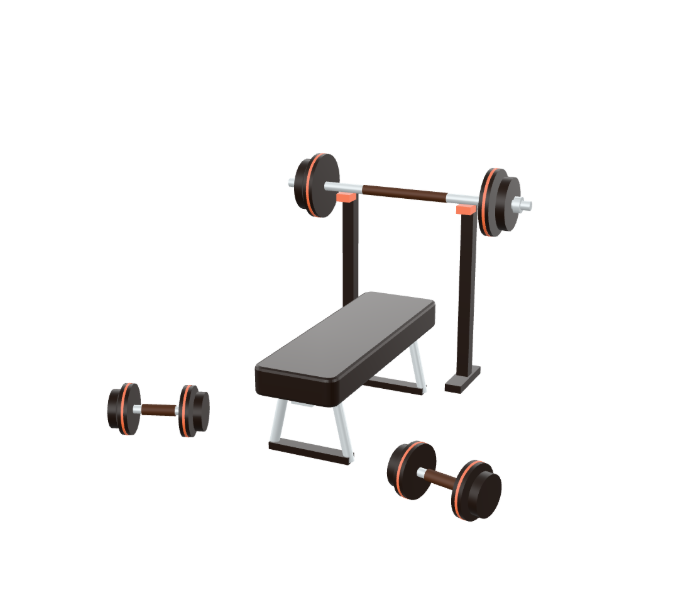
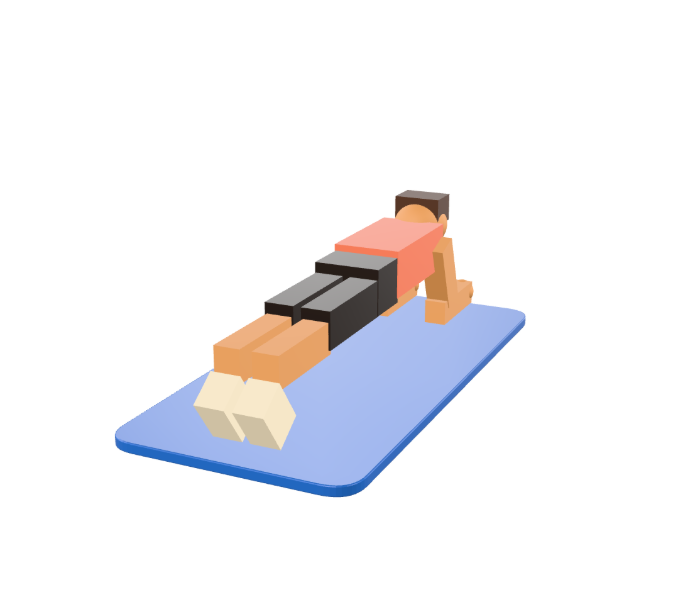
In the gym, at home, while traveling: this program follows. An EZ bar, a bench and two dumbbells already cover the whole spectrum, from dumbbell curls to close-grip bench presses to overhead extensions. Nothing on hand? Chair dips, tight push-ups and chin-ups do the work, with body weight as the load. An arm strength program without equipment simply requires more repetitions and a slower tempo. Maintain full range of motion: the arm descends to extension, then rises upwards to full contraction.

Typical week: two arm sessions

The week alternates a dedicated arm session and an upper body session, where the arms complete the work started by the pectorals and back.

4 séances par semaine. Les exercices, les charges, les séries et les temps de repos sont calculés selon votre niveau et le matériel dont vous disposez, puis ajustés à mesure que vous progressez.

From week to week, gain one rep per set before hitting the weight; once the top of the range is reached on all sets, increase the load by 1 to 2 kg.

Générer ce programme

Exercices, charges et temps de repos sont calculés selon votre niveau et votre matériel, puis ajustés à mesure que vous progressez.

Technique et exécution

What makes the difference in an arm session

Four benchmarks that separate effective work from an accumulation of series without effect.

Gardez les coudes fixes

Gardez les coudes fixes

On a curl as on extensions, only the forearm moves. Elbows moving forward or apart: the shoulders take over and your arms work less.
Don't neglect the long head of the triceps

Don't neglect the long head of the triceps

It only contracts fully with the arms above the head. Add an overhead extension to each triceps session, otherwise two thirds of the muscle remain understimulated.

Variez les prises

Variez les prises

Supination, hammer grip, tight shoulder-width grip: each position has its own beam. Alternate from one session to another rather than doing everything on the same day.
Don't do too many sets

Don't do too many sets

After twenty weekly sets per muscle, recovery becomes the limiting factor. Six clean sets are better than ten running sets.

Muscu.pro builds your program
and guides you during the session

A program generated for you

A program generated for you

You indicate your equipment, your level and your available days. The application composes a coherent arm strength training program, with the volume distributed between biceps and triceps.

La séance guidée

La séance guidée

Each exercise is displayed with its sets, repetitions and rest timer. Your charges are noted as you go. Neither notebook nor printed sheet.

Le suivi de progression

Le suivi de progression

The app records each set and compares your performance from week to week. It notifies you when a load stagnates and suggests an adjustment.

Questions fréquentes

Questions fréquentes

How many times a week should you train your arms?
Two sessions per week are sufficient in most cases. Your arms are already involved during a chest or back session, which adds indirect volume. A third short session remains possible if you recover well and if the loads continue to increase.
Can you do an arm strength training program at home without equipment?
Yes. Close-grip push-ups, dips between two chairs, supinated pull-ups: most of the work is covered. Without weight, increase the number of repetitions and slow down the descent phase. An elastic band or a weighted bag quickly expands the choice of exercises.
Is the program different for a woman?
The exercises do not change, because the muscle physiology is the same. Only the starting charges differ. Many women favor working the triceps and shoulders, with slightly longer sets, but nothing prevents you from following exactly the same progression.
Should you work biceps and triceps on the same day?
For an arm session, this is the most practical option. The two groups are antagonistic: during your curl, the triceps recover. You save time and congestion is better. Separating them is only useful on a program with five or more sessions.
What are the most effective triceps exercises?
Close grip bench press and dips for the heavy load, overhead extensions for the long head, pulley tricep extensions for the finish. Three exercises from different families are more than enough in the same week.

Accès au programme

5,90 €

Paiement unique. Accès permanent, sans abonnement.

Obtenir ce programme

Strength training program by muscle group

À voir aussi