


Dépense estimée selon votre poids
Poids du corps, rythme soutenu · 2 s par répétition
| Répétitions | Dépense estimée |
|---|---|
| 1 | 0,35 kcal |
| 10 | 3,5 kcal |
| 20 | 7,0 kcal |
| 50 | 17,5 kcal |
| 100 | 35,0 kcal |
Estimation à partir des équivalents métaboliques (MET) du Compendium of Physical Activities. La charge, le tempo et la durée des repos font varier le résultat du simple au double : à lire comme un ordre de grandeur, pas comme une mesure.
What is a renegade row: the plank with a dumbbell row
The renegade row is a high plank with a row. You set up on two dumbbells on the floor, hands under the shoulders, and pull one weight to your hip while the rest of your body refuses to move. "What is a renegade row" is one of the most common searches about this exercise. The answer fits in one sentence: it's a plank with a rowing movement added on top.
You'll also see it called a plank row or a plank dumbbell row. The word row means a horizontal pull. The load stays deliberately light (and trust me, you won't regret that): the difficulty here doesn't come from the weight, it comes from staying stable.
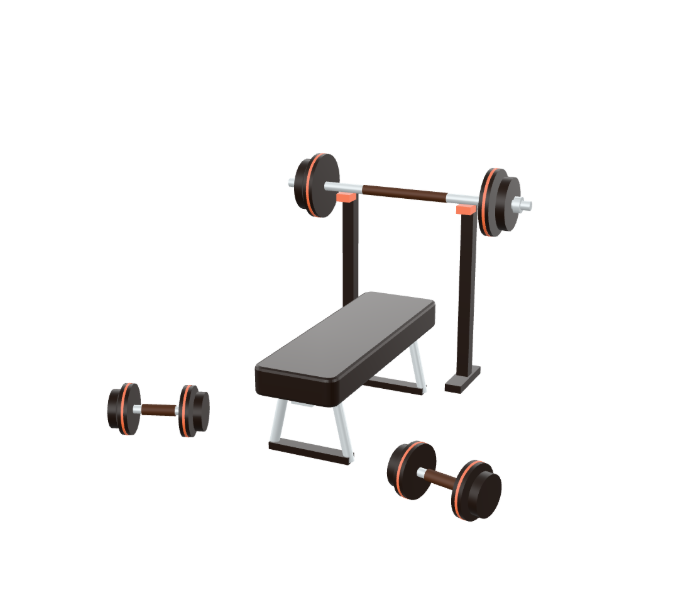
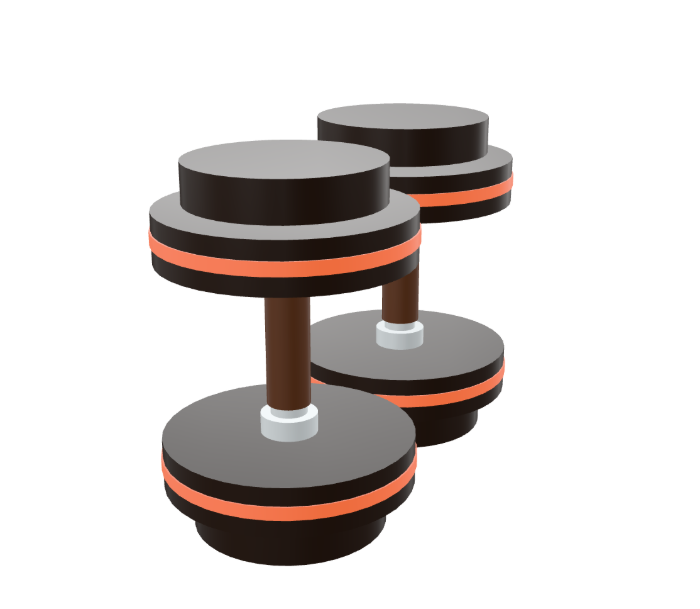
It's a full body exercise, widely used in CrossFit and in functional circuits. Equipment? Two hex dumbbells, or two kettlebells for the kettlebell renegade row version. That's it.
Muscles worked: lats, traps and abs
The renegade row works two layers at once. The back muscles produce the pull, the abs and shoulders hold the position.
- Lats, traps and rhomboids: the main movers.
- Biceps and forearms: elbow flexion and grip.
- Obliques and transverse abdominis: they block trunk rotation.
- Shoulders, triceps and chest: they lock in the support on your hands.
The anti-rotation work is the whole point. When you lift one dumbbell, your body wants to tip toward the free side. Resisting that rotation often costs more energy than the row itself, and that's exactly what makes the exercise worth doing for your upper body.
Most lifters fail a renegade row with 10 kg when they row 30 kg on a standard dumbbell row. It's not back strength that runs out, it's the core.
How to do a renegade row: step by step
Starting position
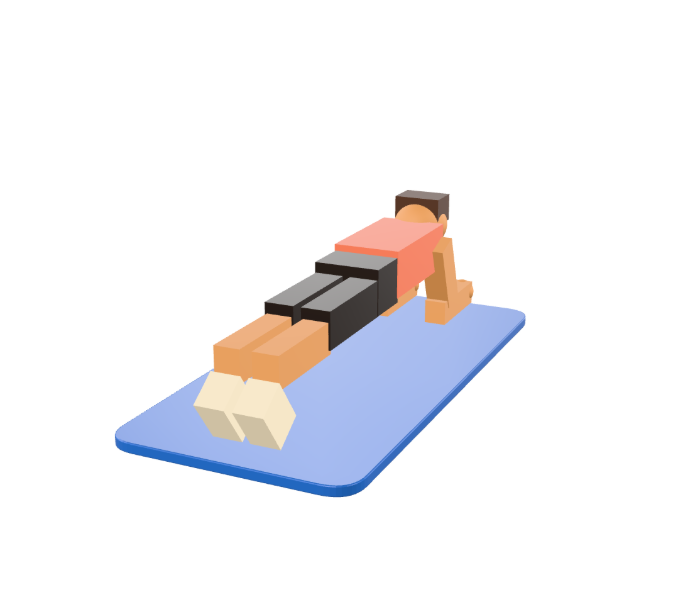
Set two dumbbells on the floor, roughly shoulder-width apart. Get into a high plank, hands on the handles, wrists neutral. Take your feet hip-width apart or a bit wider: the wider the base, the more stable you are.
Head, hips and heels in line. One straight line, nothing else. Brace your abs and squeeze your glutes before the first pull.
The pulling movement
Pull one dumbbell to your hip, elbow close to your body. Bring it up until your hand reaches your ribs, pause, then set the weight back on the floor without dropping it. Then switch arms.
Use a slow tempo rather than a fast one: about 2 seconds up and 2 seconds down. The point is control. Not racking up reps.
Mistakes to avoid
- Letting your hips rotate on every pull.
- Arching your lower back or piking your hips up.
- Using round dumbbells, which roll under your hand.
- Going too heavy and turning the row into a swing.
Renegade row or dumbbell row: which one to pick
The two exercises aren't after the same thing. The dumbbell row builds back strength and size. The renegade row builds the coordination between your core and your pull.
| Criteria | Renegade row | Bent-over row |
|---|---|---|
| Typical load | 8 to 14 kg | 20 to 40 kg |
| Core demand | High | Low |
| Goal | Functional | Hypertrophy |
| Level needed | Intermediate | Beginner |
| Equipment | 2 dumbbells | 1 or 2 dumbbells |
My advice: keep both. The bent-over row builds your base of back strength, the renegade row keeps the stability that pays off on every standing movement.
How to fit the renegade row into your sessions
Put it in the middle of the session, after the heavy work and before your finishers. You need to be fresh enough to hold the position, but not so fresh that you're sacrificing your pull-up or press sets.
- Upper body session: 3 sets of 8 reps per arm.
- Full body circuit: 4 rounds of 6 reps, 45 seconds of rest.
- Plank jack renegade row variation: add a foot jump between pulls.
Twice a week is enough. Past that, core fatigue eats into the rest of your program and your technique falls apart.
Working out where to slot an exercise like this into an already packed week takes time. MUSCU builds the schedule from your profile, your equipment and the days you actually have, with every movement on video.
Beginners: what weight to start with
Start with no load. Hold a high plank on your fists or on dumbbells sitting on the floor, 30 seconds, without your hips moving. Position holds up? Move on to a row with no weight, then to 6 kg per hand.
If your hips swivel on the very first rep, drop the weight or widen your feet. A useful alternative: the kneeling row, or the bird dog row, which keeps the anti-rotation work on a more stable base.
For your back, the exercise is safe as long as your spine stays neutral. The risk comes from arching under too much weight, not from the movement itself. If you already have low back pain, build up your core work on the floor first.
The 1,800-exercise library in our workout tracking tools suggests the matching regressions whenever a movement doesn't feel right.